
Destination
Phobjikha
The valley of the black-necked cranes
- 3,000 m
- Oct–May
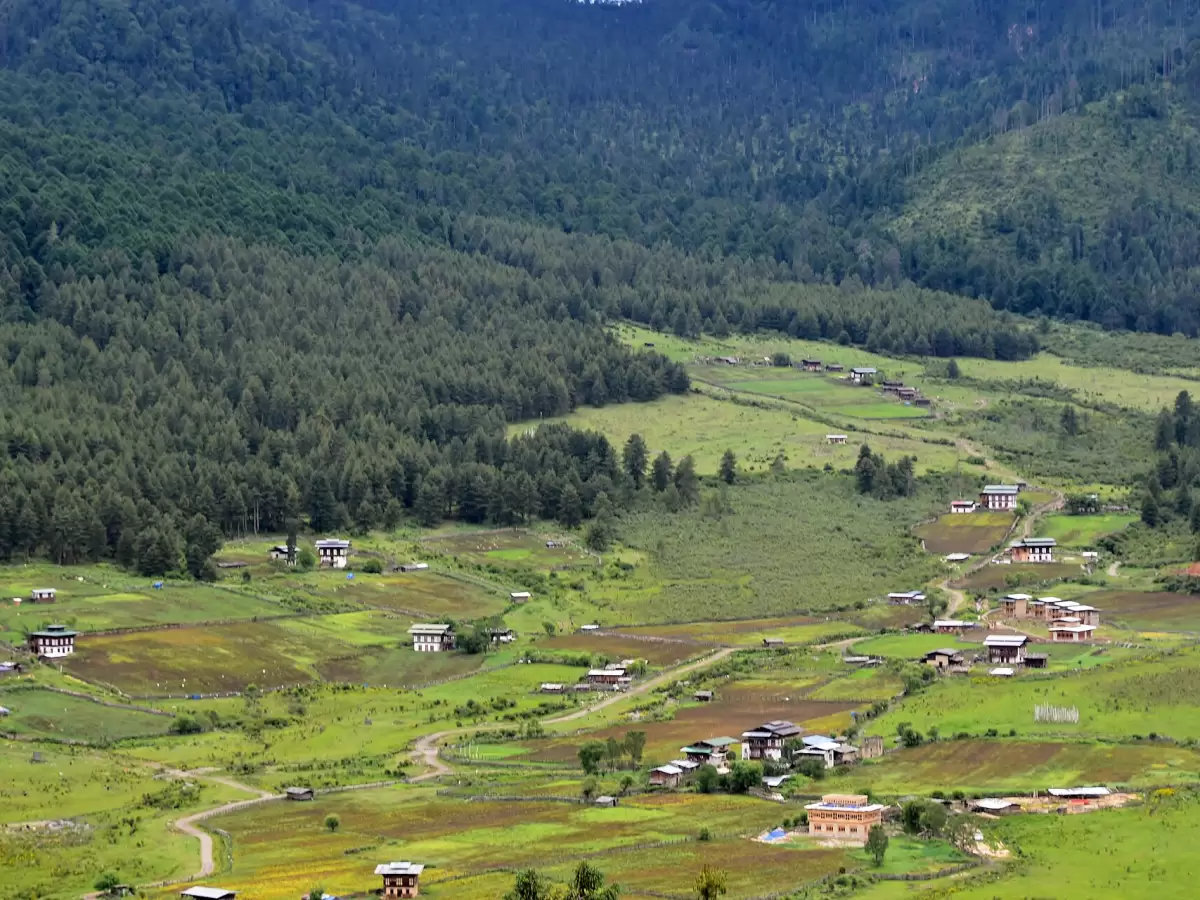
The valley
About Phobjikha
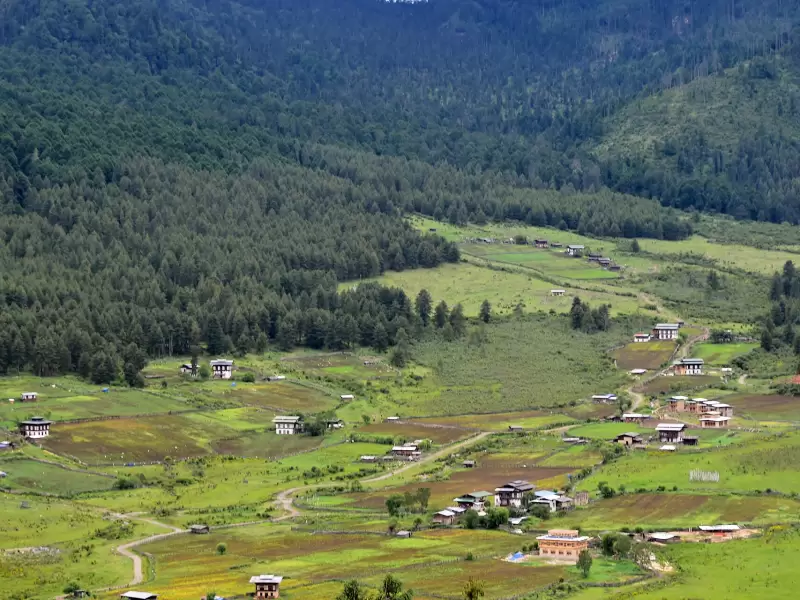
Phobjikha is a bowl of open grassland ringed by forest, high on the western side of the Black Mountains. There is one monastery, a scatter of farmhouses and very little else. After the dzongs and towns further west it is the place where most people slow down.
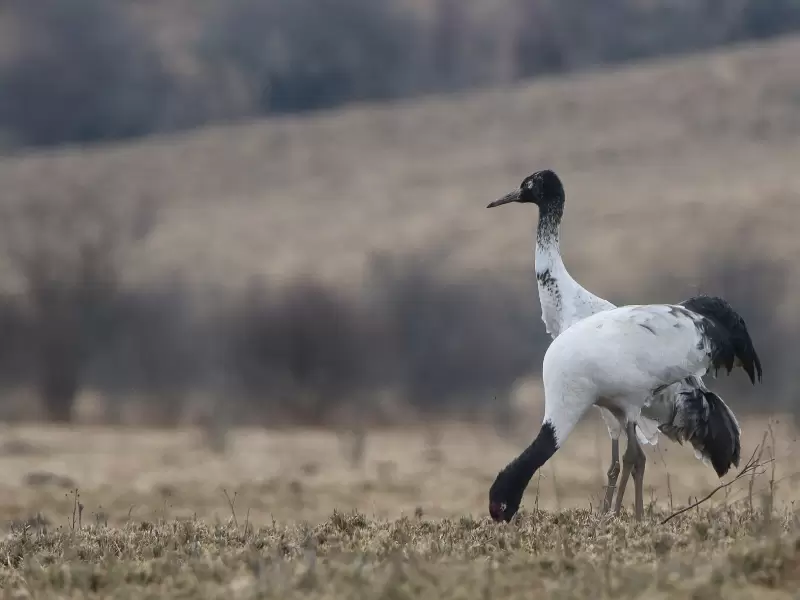
The valley is best known for its black-necked cranes. They fly in from the Tibetan plateau in late October and November and stay until February or March, feeding on the marsh in the valley floor. In the winter of 2024 to 2025 the Royal Society for Protection of Nature counted 640 of them here. Power lines in the valley were laid underground so that nothing crosses the birds’ flight path.
Even without the cranes the valley is worth the detour. The walk from Gangtey Goenpa down through pine forest to the marsh takes about two hours and is almost all downhill or flat. Nights are cold at any time of year, so bring a warm layer.
See and do
What to see
-
Gangtey Goenpa
A 17th-century monastery on a ridge above the valley, and the setting for the Black-Necked Crane Festival on 11 November.
-
Black-necked cranes
In the valley from about late October to March. Mornings and late afternoons are the best times to watch them, from the edge of the marsh.
-
Crane Information Centre
Displays on the cranes and the valley, with telescopes trained on the roosting ground.
-
Gangtey nature trail
An easy walk of about two hours from the monastery through pine forest and along the valley edge.
Go there
Trips that visit Phobjikha
Cultural tour
Complete Western Bhutan
Thimphu, Punakha, Phobjikha and 1 more
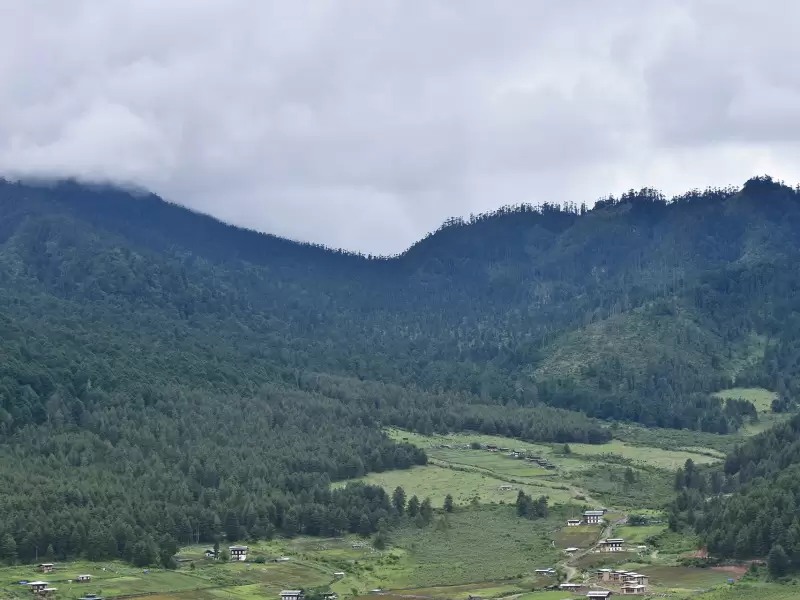
A week through four valleys: Thimphu, Punakha, the high crane valley of Phobjikha, and Paro with Tiger's Nest.
Cultural tour
Bhutan Highlands Explorer
Thimphu, Punakha, Phobjikha and 2 more
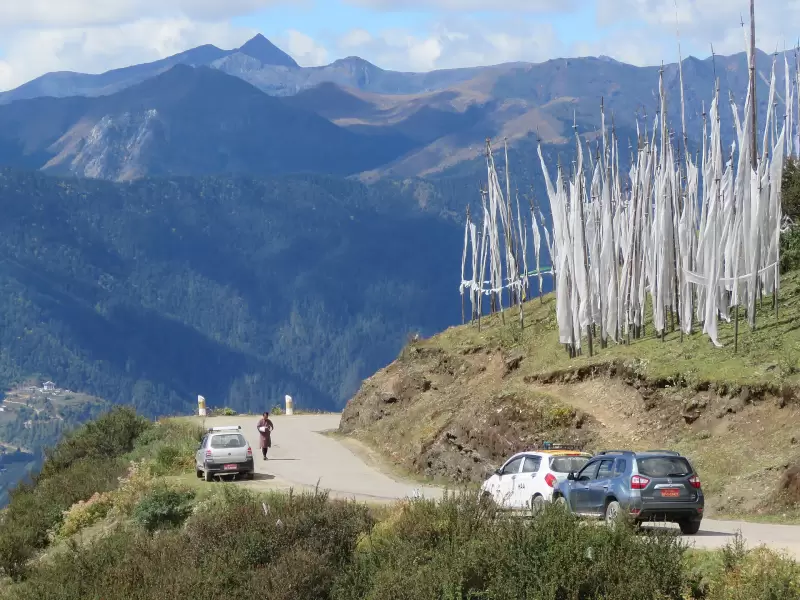
Eight days through western Bhutan at an easier pace, with Phobjikha, a third night in Thimphu and the drive up to Chele La at 3,988 m.
Luxury and special interest
Bhutan Photography Tour
Punakha, Phobjikha, Thimphu and 1 more
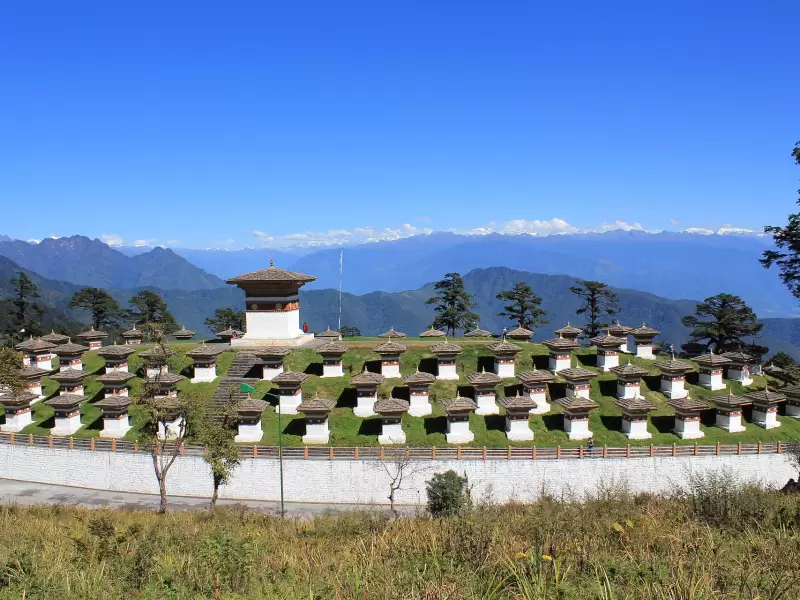
Eight days in western Bhutan planned around the light: Dochu La at sunrise, two nights in Punakha, dawn in Phobjikha and Tiger's Nest in the afternoon.
Festival tour
Black-Necked Crane Festival Tour
Phobjikha, Punakha, Thimphu and 1 more
Eight days with two nights in the Phobjikha valley, timed to the crane festival at Gangtey Goenpa on 11 November.
Festival tour
Thimphu Tshechu Festival Tour
Thimphu, Punakha, Phobjikha and 1 more
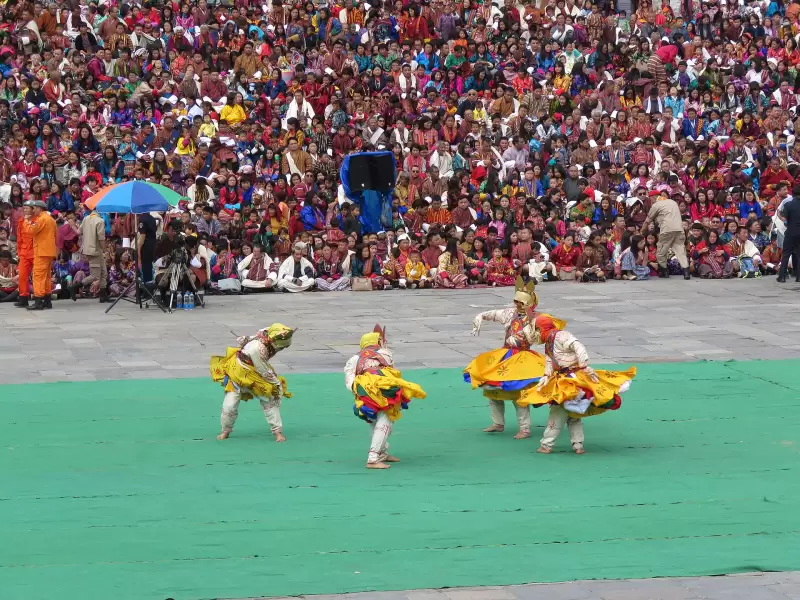
Eight days in the clear weather of autumn, with the capital's three-day tshechu and, when the dates allow, a village festival in Phobjikha.
Cultural tour
Heart of the Himalayas
Punakha, Phobjikha, Trongsa and 1 more
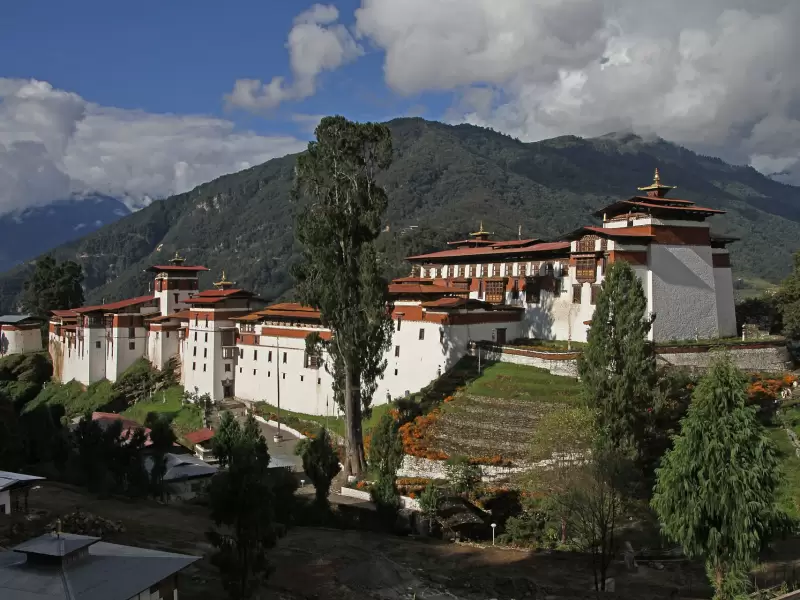
Nine days from Paro to Bumthang by road, through Punakha, Phobjikha and Trongsa, with a short flight back.
Festivals
Festivals in Phobjikha
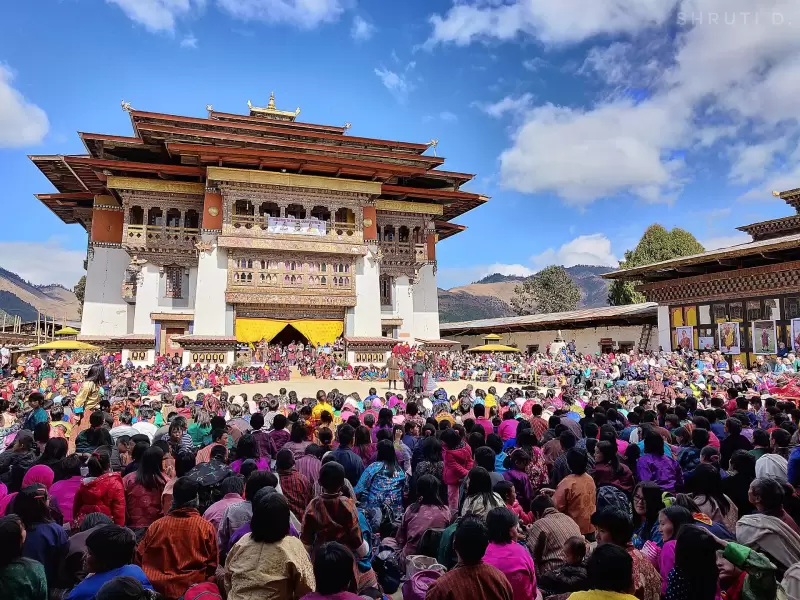
Black-Necked Crane Festival
Welcoming the cranes back to Phobjikha
Gangtey Tshechu
The dances of Pema Lingpa, above the valley of the cranes
Questions
Good to know
When can I see black-necked cranes?
The cranes arrive in the Phobjikha valley from late October and stay until February or March. The best times of day are early morning and dusk, when they fly between their roost on the marsh and the fields where they feed. The valley holds a festival for them at Gangtey Goenpa on 11 November each year.
Will I get altitude sickness?
On a cultural tour it is unlikely to be more than mild. Paro and Thimphu lie between 2,200 m and 2,350 m, where many people notice a little breathlessness or a light headache for the first day. The highest points are Tiger’s Nest at 3,120 m and road passes of 3,100 m to 3,988 m, which you visit and come down from.
Treks go much higher, and we plan them with acclimatisation days. Walk slowly, drink plenty of water, avoid alcohol for the first days, and tell your guide at once if you feel unwell. If you have a heart or lung condition, speak to your doctor before booking. More in altitude in Bhutan.