
Festival
Black-Necked Crane Festival
Welcoming the cranes back to Phobjikha
- 11 November 2026
- Gangtey Goenpa, Phobjikha, Wangdue Phodrang
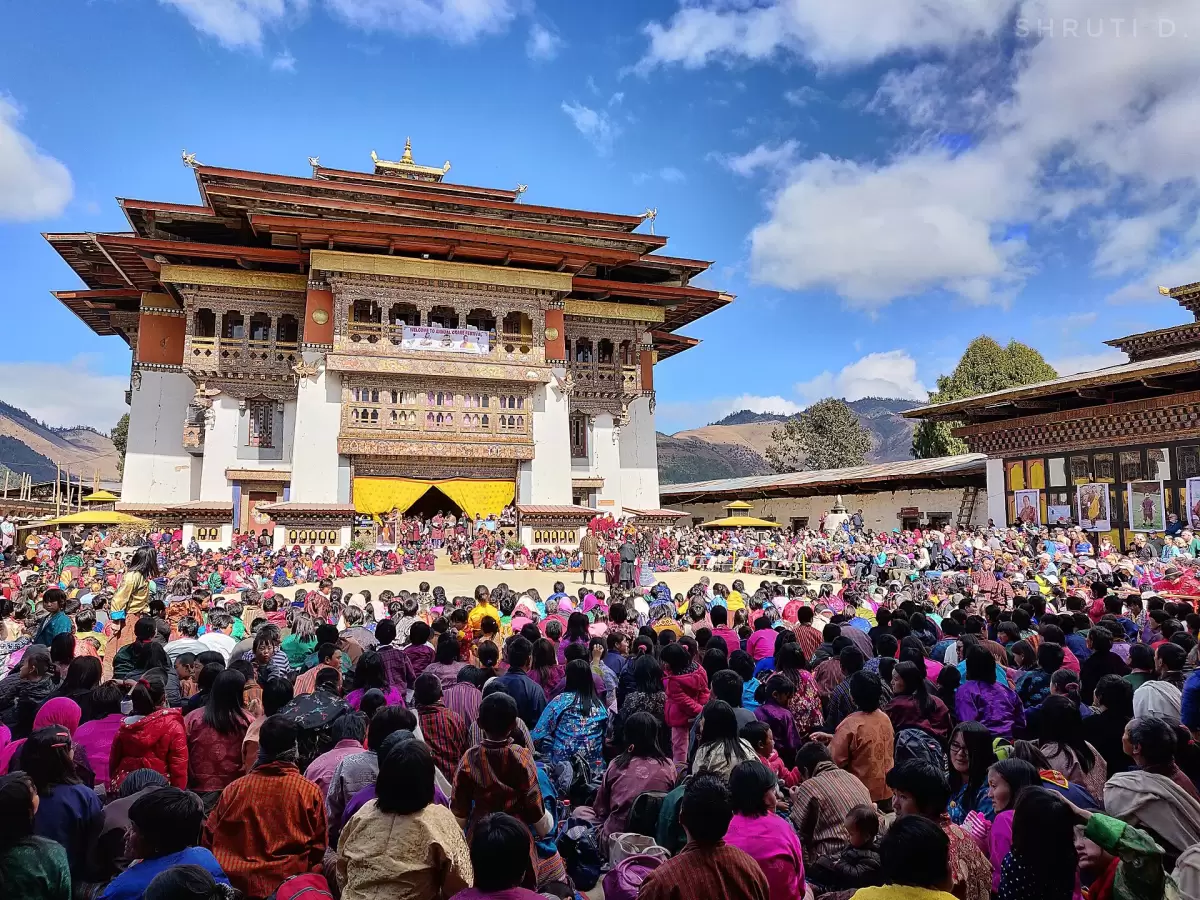
The festival
What happens
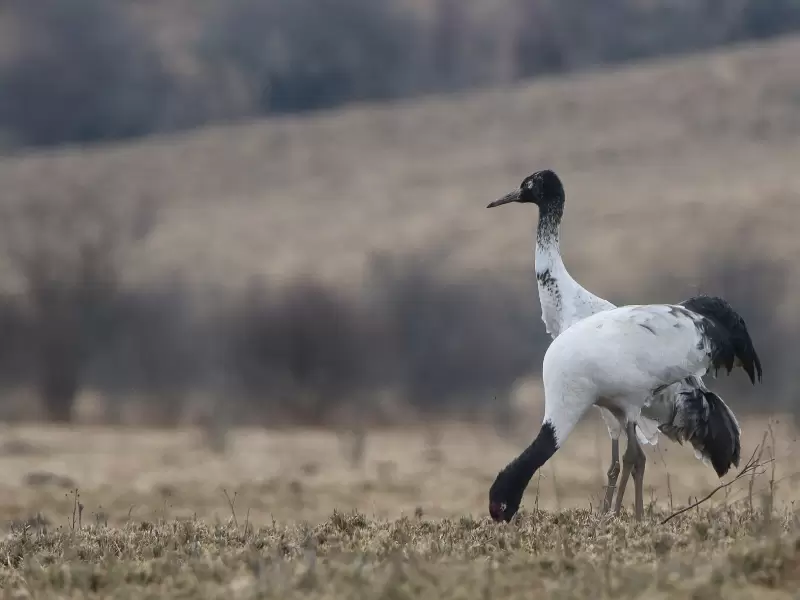
Black-necked cranes breed on the Tibetan plateau and fly south over the Himalaya each autumn. Several hundred of them spend the winter in the Phobjikha valley, arriving from late October and leaving in February or March. The valley’s people hold the birds in great affection, and local tradition says the cranes circle Gangtey Goenpa three times when they arrive and again when they leave.
On 11 November every year the valley holds a festival in the monastery’s courtyard to welcome them back. It was started to celebrate the cranes and to give the community a stake in protecting them, and it is organised by local people with the Royal Society for Protection of Nature. The date is also the birthday of the Fourth King of Bhutan.
What you will see
The festival lasts a single day. Schoolchildren in black and white crane costumes perform the crane dance, which is the heart of the programme. Around it come masked dances by the monks, folk songs and dances by groups from the valley, and short plays with a conservation message.
Seeing the cranes
The birds themselves are on the marsh in the valley floor, not at the monastery. The best times to watch them are early morning, when they leave their roost to feed in the fields, and dusk, when they return. The Crane Information Centre has telescopes and displays, and the Gangtey nature trail runs along the edge of the wetland. In the winter of 2024 to 2025 the Royal Society for Protection of Nature counted 640 cranes in Phobjikha.
Please keep to the paths, keep your voice down, and never approach the birds. Drones are not permitted.
Practical notes
- Phobjikha lies at 3,000 m. In November the days are bright and cold and the nights are below freezing.
- Bring binoculars if you have them, and a long lens if you photograph wildlife.
- The valley has few hotels. Stay two nights if you can, so that the festival day is not rushed.
- The festival is on a fixed date, 11 November, unlike most Bhutanese festivals.
See it for yourself
Trips that fit this festival
Any of these can be timed to the festival dates. Tell us which days you want to be there.
Festival tour
Black-Necked Crane Festival Tour
Phobjikha, Punakha, Thimphu and 1 more
Eight days with two nights in the Phobjikha valley, timed to the crane festival at Gangtey Goenpa on 11 November.
Cultural tour
Complete Western Bhutan
Thimphu, Punakha, Phobjikha and 1 more
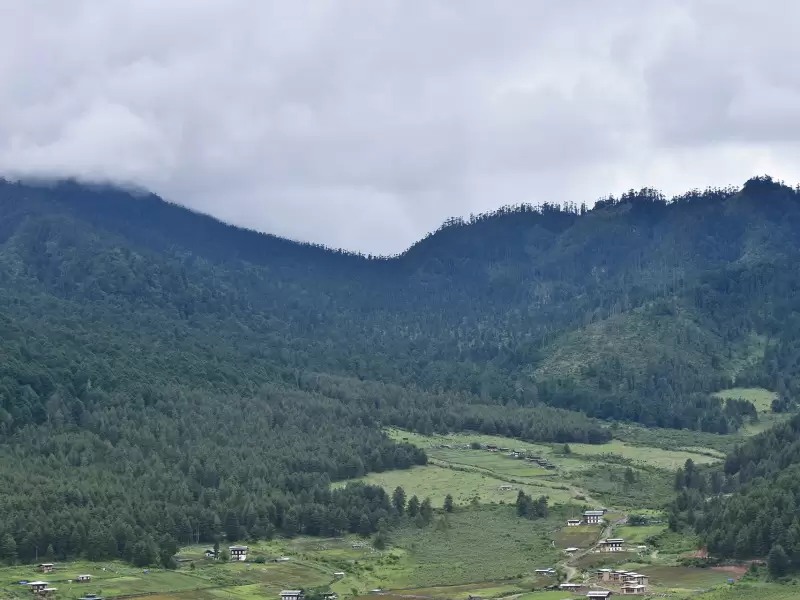
A week through four valleys: Thimphu, Punakha, the high crane valley of Phobjikha, and Paro with Tiger's Nest.
Cultural tour
Bhutan Highlands Explorer
Thimphu, Punakha, Phobjikha and 2 more
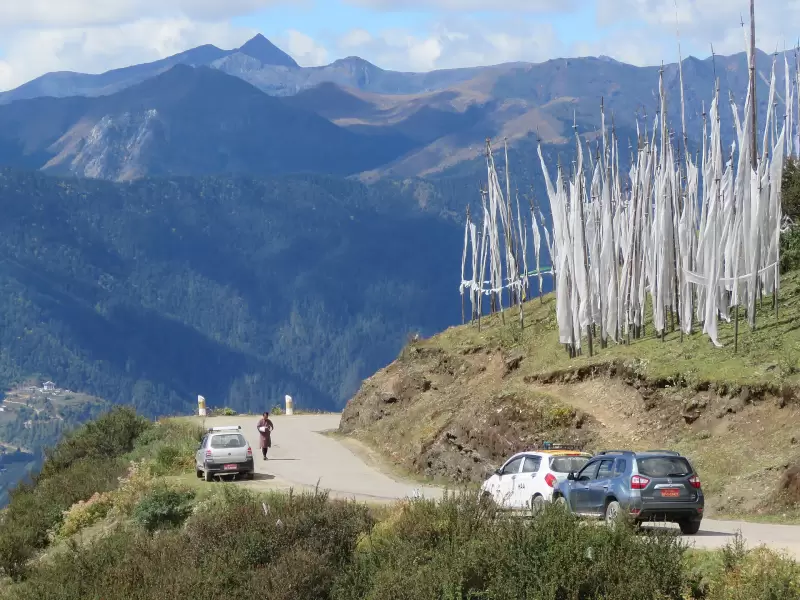
Eight days through western Bhutan at an easier pace, with Phobjikha, a third night in Thimphu and the drive up to Chele La at 3,988 m.
Where
Gangtey Goenpa, Phobjikha, Wangdue Phodrang
- Gangtey Goenpa, Phobjikha Festival ground
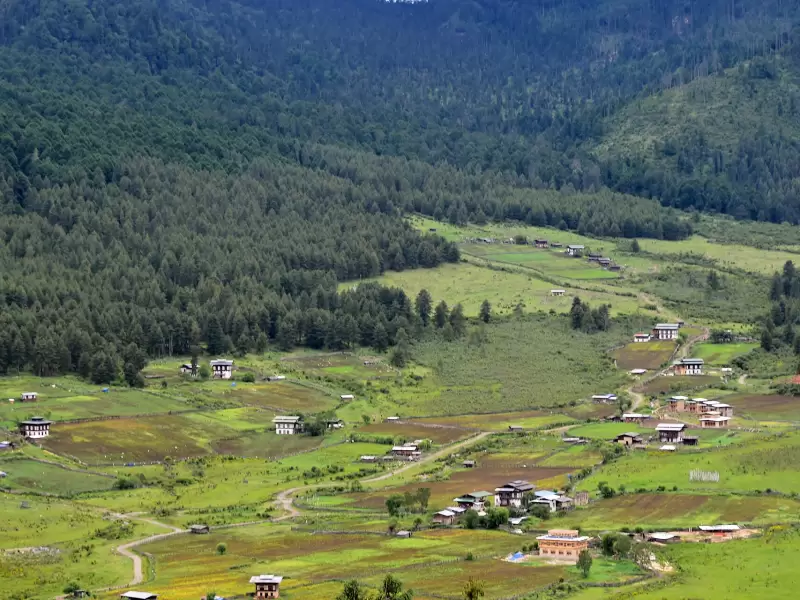
Phobjikha
The valley of the black-necked cranes
Questions
Asked about this festival
When can I see black-necked cranes?
The cranes arrive in the Phobjikha valley from late October and stay until February or March. The best times of day are early morning and dusk, when they fly between their roost on the marsh and the fields where they feed. The valley holds a festival for them at Gangtey Goenpa on 11 November each year.
What should I wear to a festival?
A festival is a religious occasion and Bhutanese come in their best clothes. Wear long sleeves and full-length trousers or a long skirt, and take off your hat inside a dzong. You will be sitting on stone for hours, often in strong sun, so bring a cushion, a sun hat for outside the dzong, water and a warm layer for the early morning.
Can I take photographs at a festival?
Yes, in the courtyard or festival ground, from where you are sitting. Do not step into the dance area or block other people’s view, and ask before photographing anyone at close range. Photography is never allowed inside temples and shrines.
A few rituals may not be photographed at all, among them the midnight Tercham at Jambay Lhakhang. Your guide will tell you. Drones are not permitted.
Enquire
Plan a trip around Black-Necked Crane Festival
Hotels near festival grounds fill early. Tell us your dates and we will check what is still available.