

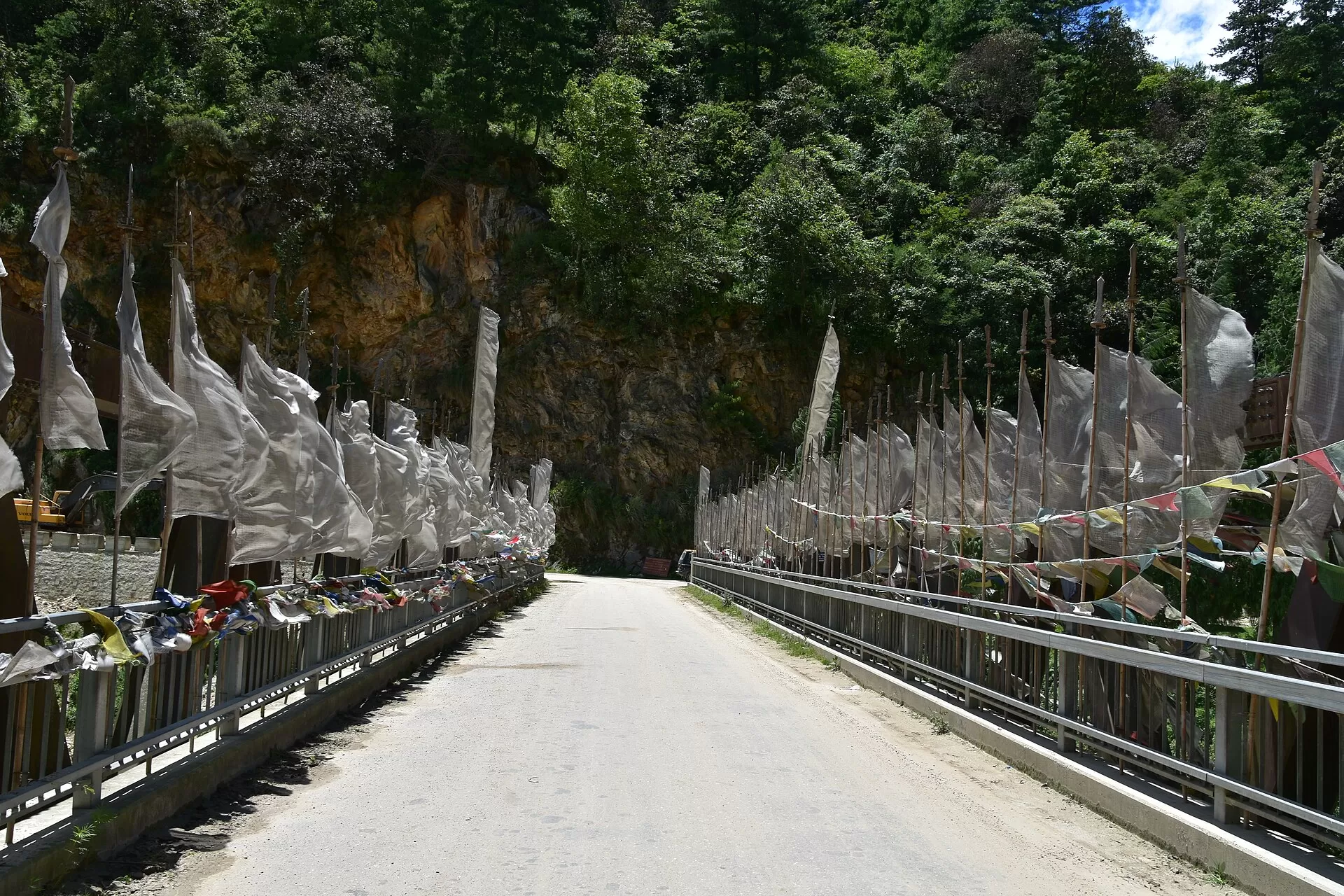
Bhutan has one main road. It runs from the west of the country to the east, over a pass, down to a river, and over the next pass, again and again, with little traffic once you are beyond Thimphu. That makes Bhutan cycling and motorbike tours some of the most memorable journeys in the Himalaya, and also hard work. This page explains what is involved.
Every two-wheeled trip we run is private and planned around the riders. A guide rides or drives with you, and a support vehicle follows with luggage, water, spares and room for anyone who has had enough for the day.
The road and its passes
- Chele La (3,988 m) between Paro and Haa, the highest road pass in the country
- Dochu La (3,100 m) between Thimphu and Punakha, with its 108 chortens and a long descent into warm air
- Pele La on the way to Trongsa, the old boundary between western and central Bhutan
- Yotong La, above 3,400 m, between Trongsa and Bumthang
- Thrumshing La (3,780 m) on the road east to Mongar
The climbs are long and steady, not steep: the road was built for lorries. The descents are longer than most riders have ever met. Surfaces are tarred on the main road, with rough stretches wherever it is being widened or has slipped in the rains.
Cycling
A cycling trip in the west usually links Paro, Thimphu, Punakha and Phobjikha in a week, riding part of each day and driving the rest, with the walk to Tiger’s Nest on a day off the bike. Strong riders can carry on to Trongsa and Bumthang. The valley floors of Paro, Punakha and Bumthang have gentle riding for those who want the views without the passes.
The country’s great race is the Tour of the Dragon, from Bumthang to Thimphu over four passes in a single day. If you want to enter it, or to ride its route over several days, we can arrange the trip around it.
Motorbikes
The same road suits a motorbike well: bends without number, forest, and a dzong at the end of most days. A motorbike tour covers more ground than a bicycle, so ten days to two weeks can take in the centre of the country and, for those with time, the east.
A rider who comes in by road on a motorbike of their own pays a daily charge for it and must travel with a guide: the rules are on our page about Bhutan from India.
When to ride
March to May and late September to November are the months, as they are for trekking. In winter there can be ice and snow on the passes in the mornings. In the monsoon, from June to early September, the road is wet and landslips can close it for hours. Our guide to the best time to visit Bhutan has the detail.
Who it suits
Riders who are used to hills and are happy at altitude: you will sleep at 2,200 to 2,900 m most nights and cross passes far higher. Read our note on altitude in Bhutan before deciding. Mixed groups work well, because the vehicle can carry those who would sooner not ride that day.
What it costs
Prices are per person in US dollars and include the Sustainable Development Fee, the visa, hotels, meals, guide and support vehicle. The hire of bicycles or motorbikes is added to that. We quote for each trip; what a trip to Bhutan costs explains how a price is made up.
Plan a ride
Tell us whether you want to cycle or ride a motorbike, how many days you have, and how much time in the saddle each day sounds right.