

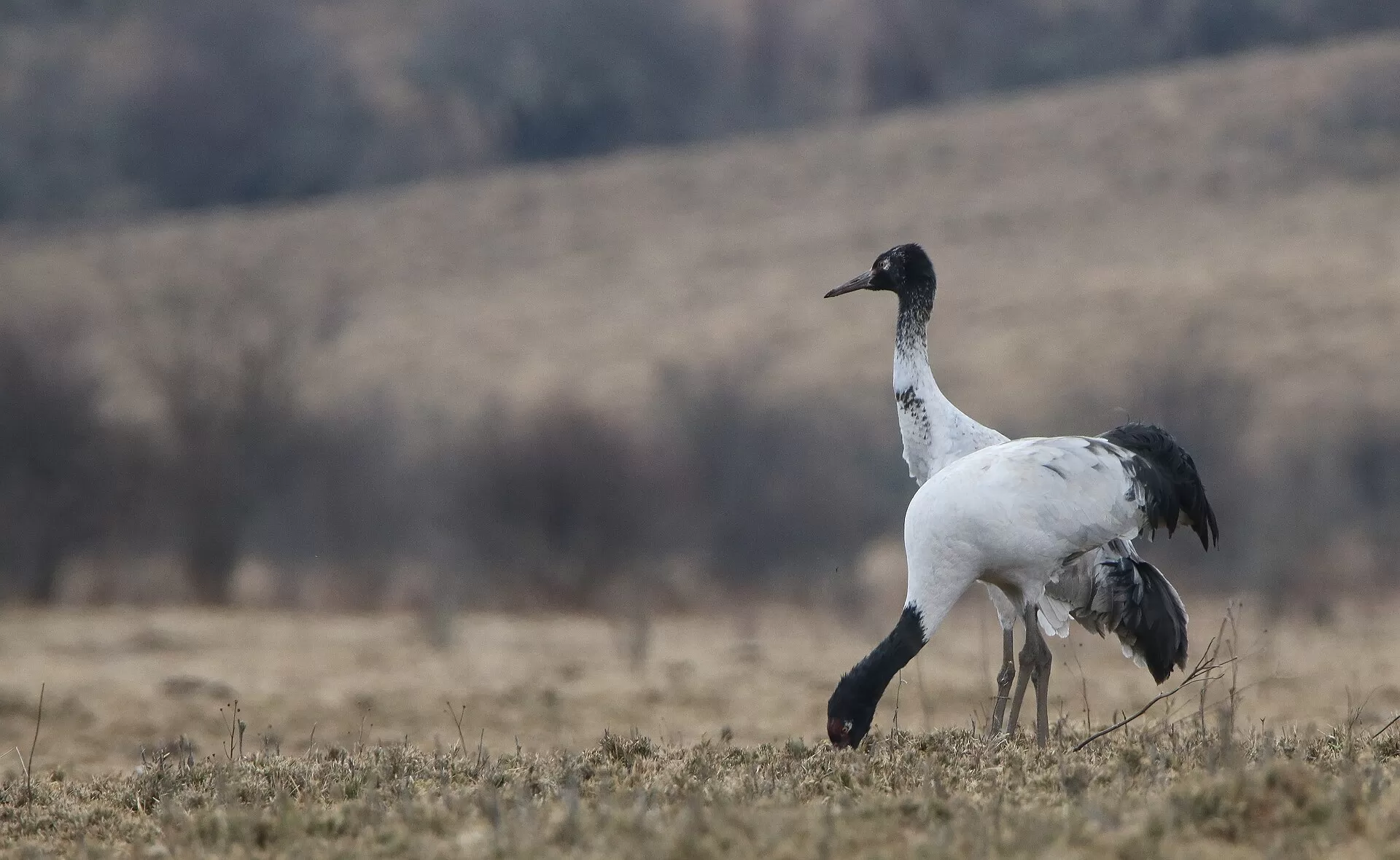
More than 700 kinds of bird have been recorded in Bhutan, a country about the size of Switzerland. The reason is height: within a day’s drive the land climbs from subtropical forest near the Indian border to alpine passes above 3,500 m, and well over half of it is still under forest. A Bhutan birdwatching tour follows the road through those layers, stopping where the birds are.
We plan each birding trip privately, around the season, the species you most want and how much walking you like. There is no fixed departure and no fixed route. What follows is what a trip can include.
Where the birds are
- Phobjikha: the wide glacial valley where black-necked cranes arrive from Tibet in late October and stay until February. The crane festival is held there on 11 November.
- Punakha and the rivers below it: warm, low valleys with ibisbill on the shingle and, with luck and patience, the white-bellied heron, one of the rarest herons in the world.
- The high passes: Chele La, Dochu La, Pele La and Thrumshing La, for pheasants, among them the Himalayan monal and the blood pheasant, in the early morning before traffic.
- Zhemgang and the road to Tingtibi: broadleaved forest known for hornbills, and for the golden langur, a monkey found only in Bhutan and a small part of Assam.
- Mongar and the forest below Thrumshing La: the long descent from the pass towards Lingmethang, which serious birders regard as the best road in the country.
- Trashiyangtse: Bumdeling, the second wintering ground of the cranes, in the far east.
When to come
Spring, from March to May, is the main season: resident birds are singing and nesting, migrants are passing through, and the rhododendrons are in flower on the passes. November to February is the season for the cranes and for wintering waterbirds, with cold, clear mornings. The monsoon months are the least rewarding, and leeches are active in the lower forests. See the best time to visit Bhutan for the weather in each month.
How a birding trip differs
- Earlier starts, with breakfast often carried and eaten on the road
- Slower travel, with the vehicle following while you walk the quiet stretches
- More nights in the centre and east, where hotels are simple and the forest is close
- A length of ten to fourteen days if the east is included, or a week for the western valleys and Phobjikha
What it costs
A birding trip is priced like our other private tours: per person in US dollars, including the Sustainable Development Fee, the visa, hotels, meals, guide, vehicle and driver. The figure depends on the length and on how far east you go, so we quote for each trip. For a sense of scale, look at the prices on tours of the same length, such as the 10-day Grand Cultural Tour or the 17-day East to West journey.
Plan a birding trip
Tell us the month, the number of days and the birds you most hope to see. We will reply with a route and a price.