
Festival
Thimphu Tshechu
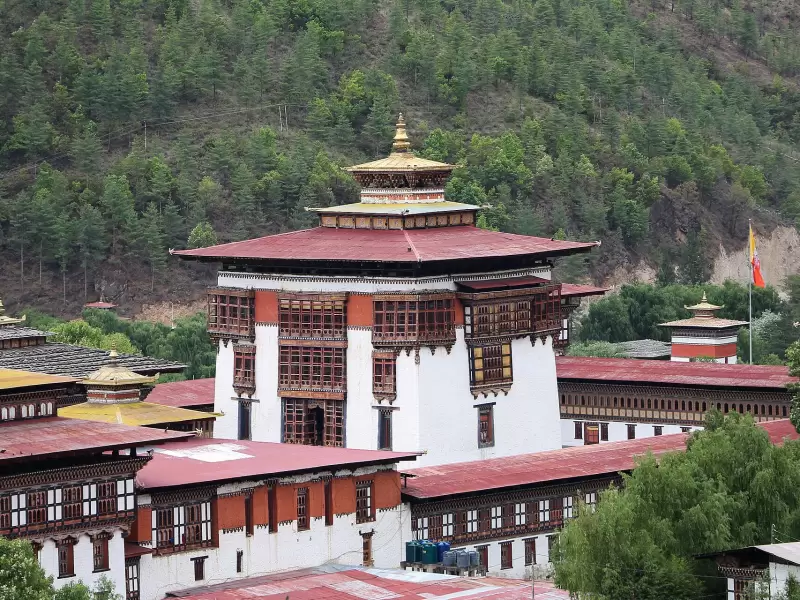
The capital's festival, at Tashichho Dzong
- 10–12 October 2027
- Tashichho Dzong, Thimphu
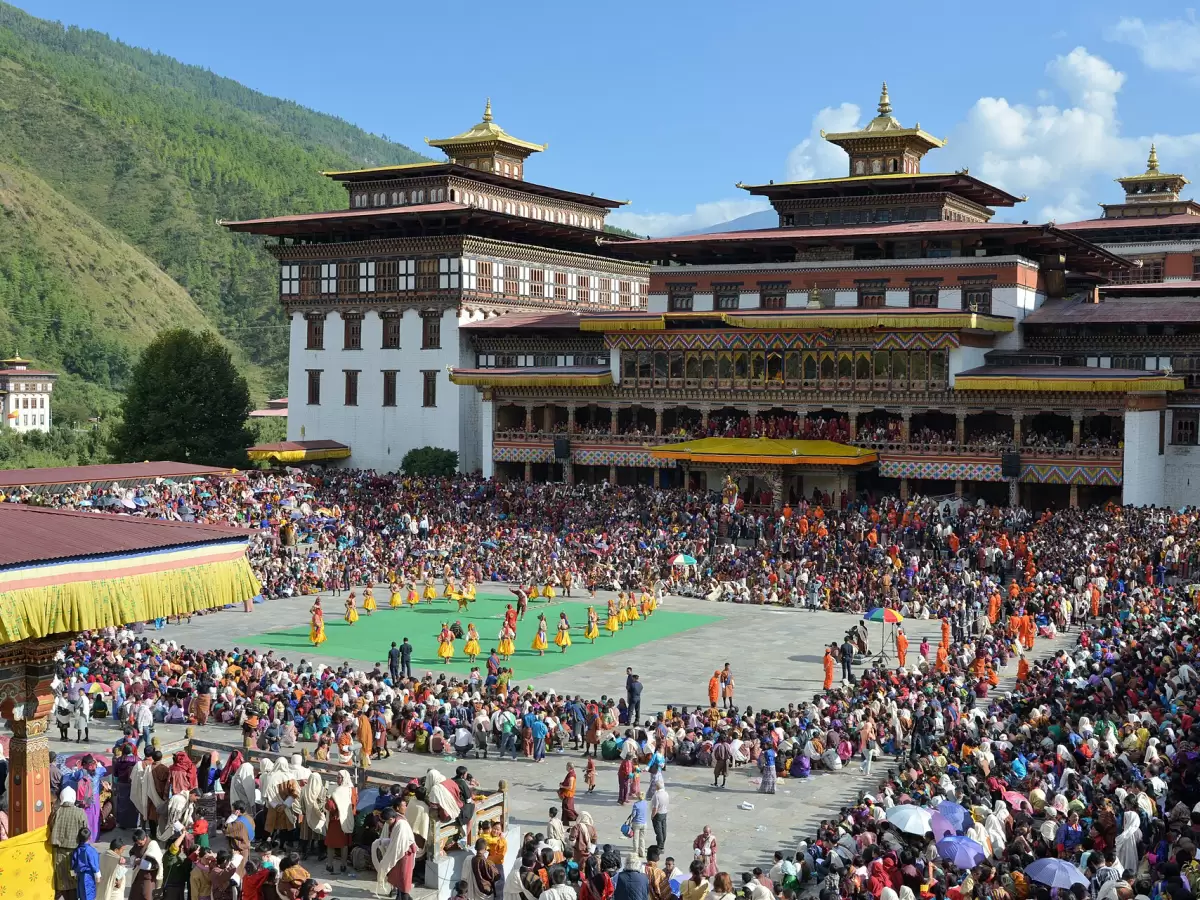
The festival
What happens
Thimphu Tshechu is the capital’s festival and one of the biggest in the country. It is held over three days at Tashichho Dzong, beginning on the tenth day of the eighth month of the Bhutanese calendar, which falls in September or October. The dances are performed at Tendrel Thang, the open festival ground beside the dzong.
People come from every district for it. Offices close, families dress in their best silk and brocade, and the steps around the festival ground fill from early morning. For many Bhutanese it is a religious duty as much as a holiday: the dances are blessings, and to watch them is to gain merit.
What you will see
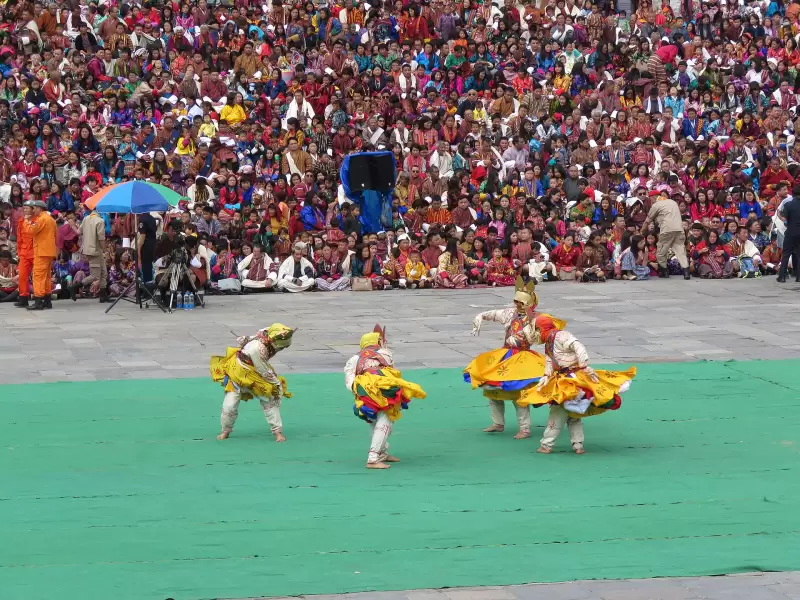
The programme is made up of cham, sacred masked dances performed by monks and by lay dancers. Among them are the Dance of the Four Stags, the Black Hat dance, performed to the beat of drums, and the story of the stag and the hounds, in which a hunter is turned from killing by a saint. Between the dances come folk songs, and the atsaras, the masked clowns, tease the crowd.
The Drubchen
A few days before the Tshechu the dzong holds the Thimphu Drubchen, a day of dances dedicated to Palden Lhamo, the protecting deity of Bhutan. It is a smaller occasion and less crowded, and worth seeing if your dates allow. In 2027 it is listed for 5 October.
Where it comes from
Tradition dates the Thimphu Tshechu to 1670 and links it with Tenzin Rabgye, who later ruled Bhutan as its fourth Desi.
Practical notes
- Dress as for a formal occasion: long sleeves, long trousers or a skirt, and no hat inside the dzong.
- Arrive early. The best places are taken by mid-morning.
- Bring water, sun protection and a cushion. The steps are stone.
- Do not step into the dance ground, and ask before photographing people at close range.
- Autumn is the busiest season in Bhutan, so flights and hotels need booking well ahead.
See it for yourself
Trips that fit this festival
Any of these can be timed to the festival dates. Tell us which days you want to be there.
Festival tour
Thimphu Tshechu Festival Tour
Thimphu, Punakha, Phobjikha and 1 more
Eight days in the clear weather of autumn, with the capital's three-day tshechu and, when the dates allow, a village festival in Phobjikha.
Cultural tour
Complete Western Bhutan
Thimphu, Punakha, Phobjikha and 1 more
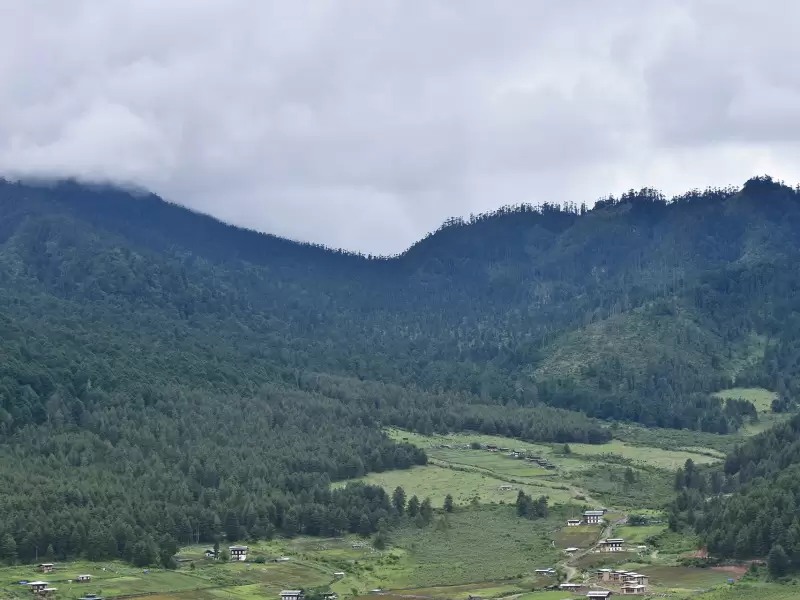
A week through four valleys: Thimphu, Punakha, the high crane valley of Phobjikha, and Paro with Tiger's Nest.
Cultural tour
Bhutan Signature Journey
Thimphu, Punakha, Paro
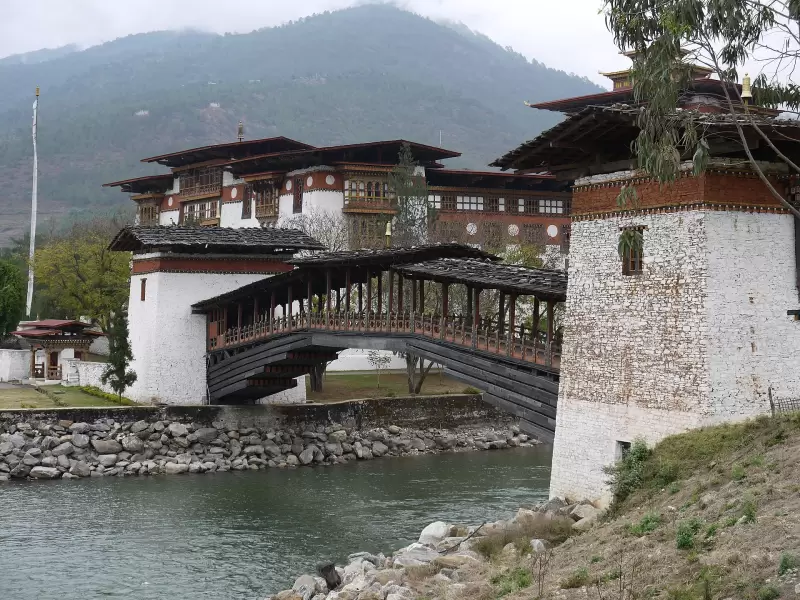
Six days with a night in each of the three western valleys: two in Thimphu, one in Punakha and two in Paro.
Where
Tashichho Dzong, Thimphu
- Tashichho Dzong, Thimphu Festival ground
Thimphu
The capital, small enough to walk
Questions
Asked about this festival
Are festival dates fixed?
Most are not. Bhutan’s festivals follow the lunar calendar, so they fall on different dates each year. The Department of Tourism and the Association of Bhutanese Tour Operators publish a list for each year and label it tentative, because dates can still move.
Our festival calendar shows the official dates and the day we last checked them. Confirm with us before you book flights. The Black-Necked Crane Festival is the exception: it is held on 11 November every year. If you are deciding between festivals, read how to choose a Bhutan festival.
What should I wear to a festival?
A festival is a religious occasion and Bhutanese come in their best clothes. Wear long sleeves and full-length trousers or a long skirt, and take off your hat inside a dzong. You will be sitting on stone for hours, often in strong sun, so bring a cushion, a sun hat for outside the dzong, water and a warm layer for the early morning.
Can I take photographs at a festival?
Yes, in the courtyard or festival ground, from where you are sitting. Do not step into the dance area or block other people’s view, and ask before photographing anyone at close range. Photography is never allowed inside temples and shrines.
A few rituals may not be photographed at all, among them the midnight Tercham at Jambay Lhakhang. Your guide will tell you. Drones are not permitted.
How far ahead should I book a festival tour?
As early as you can. Paro Tshechu and Thimphu Tshechu fall in the two busiest seasons of the year, and both the flights and the hotels closest to the festival fill well ahead. Smaller festivals, such as those in Bumthang and Phobjikha, are held in valleys with few hotel rooms to begin with.
Enquire
Plan a trip around Thimphu Tshechu
Hotels near festival grounds fill early. Tell us your dates and we will check what is still available.