
Bhutan with children: a family travel guide
Why Bhutan works well for families, what children enjoy, how to pace the days, and what it costs to bring them.
Bhutan is not an obvious family destination. There are no beaches and no theme parks, and the main sights are monasteries. Yet it suits children well, for reasons that are easy to miss until you are here: the trips are private, the people are fond of children, and much of what there is to do involves being outdoors.
Why it works
- You set the pace. Every trip is private, with your own guide, driver and vehicle. If a child is tired or carsick, the day changes. Nobody else is waiting.
- Children are welcome everywhere. Bhutanese families are large and close, and children are part of public life. Yours will be smiled at, spoken to and occasionally handed a sweet.
- It is calm. Towns are small, traffic is light, and there is very little hassle.
- A guide is a great help. A good guide tells stories, answers endless questions and knows where the nearest toilet is.
What it costs
The Sustainable Development Fee is lower for children. Under-6s pay nothing, and those aged 6 to 11 pay US$50 a night, half the adult rate. Monument entry fees are half price for under-18s and free for children of 5 and under. Children sharing a room with their parents bring the hotel cost down too.
What children enjoy
- Archery. The national sport. Watching a match is good. Having a go with a bamboo bow is better.
- The Takin Preserve in Thimphu, home of an animal that looks as if it was put together from spare parts.
- Simply Bhutan, a small living museum in Thimphu where visitors can try on national dress.
- The Postal Museum, where you can have your own photograph printed on real stamps and post a card home with them.
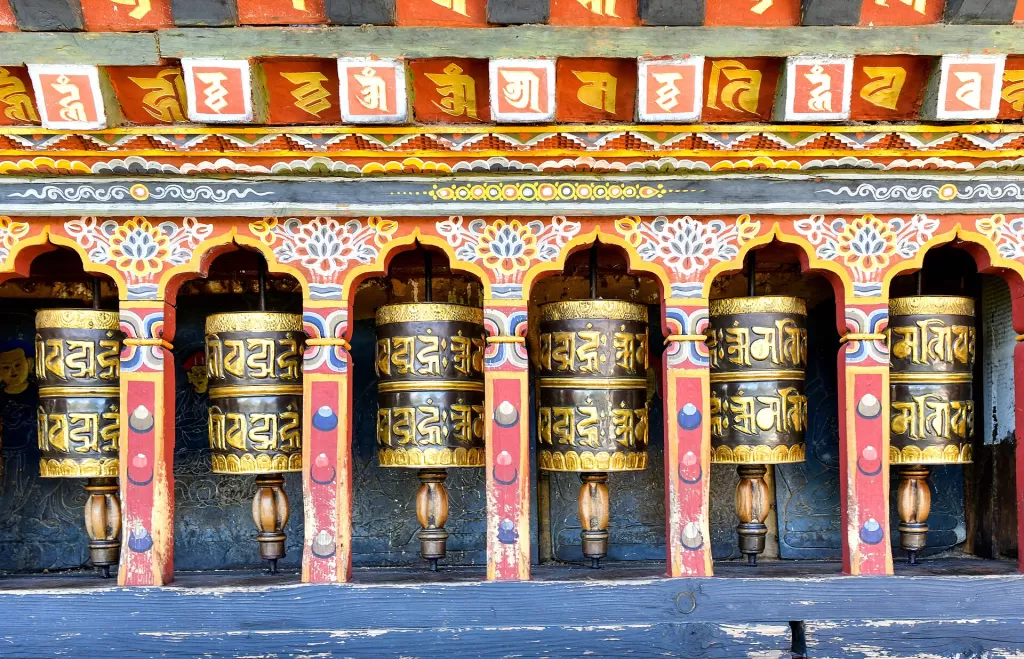
- Prayer wheels. Big ones, small ones, ones turned by streams. Children never tire of them.
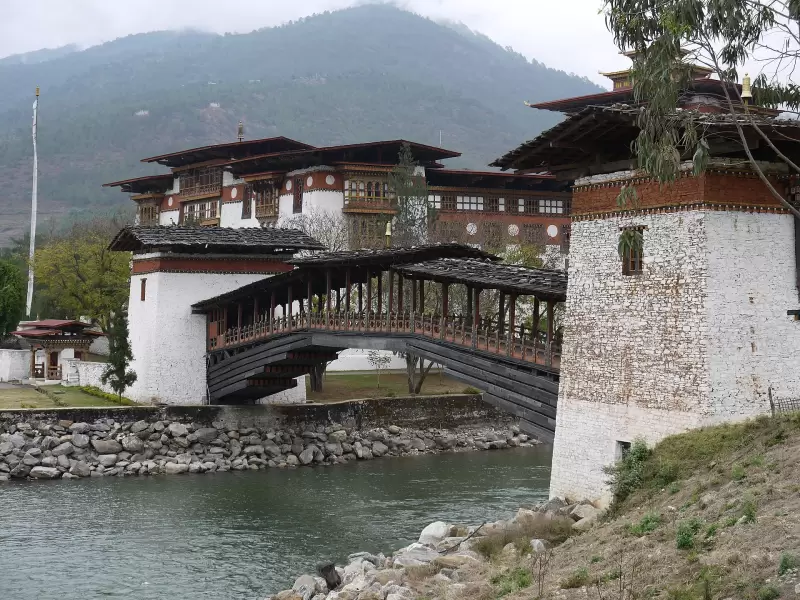
- The suspension bridge in Punakha, about 160 m long and gently bouncy.
- A farmhouse visit, with animals on the ground floor and a ladder to climb.
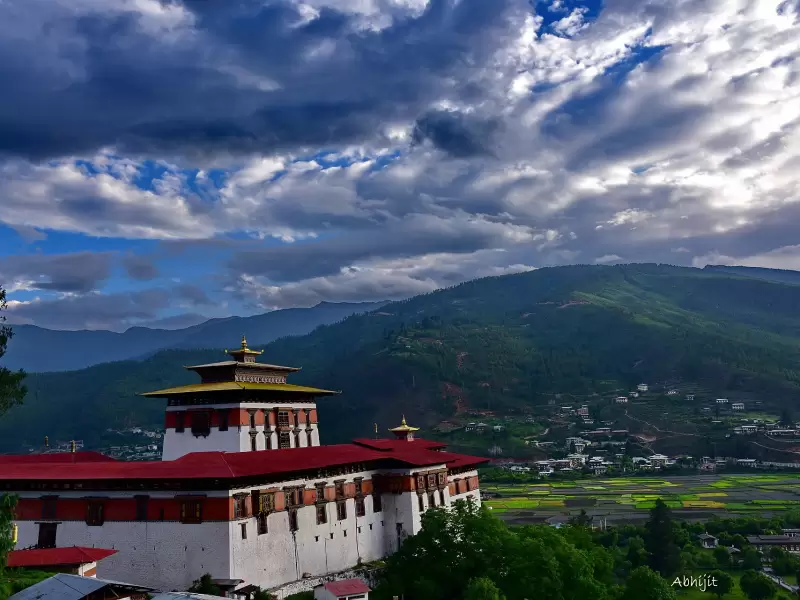
- Dzongs. To a child a dzong is a castle, and they are right.
- Counting the chortens at Dochu La. There are 108.
Walking and Tiger’s Nest
Short walks are the best part of most family days: twenty minutes through rice fields to Chimi Lhakhang, forty-five up to Khamsum Yulley Namgyal Chorten, two easy hours on the nature trail in Phobjikha.
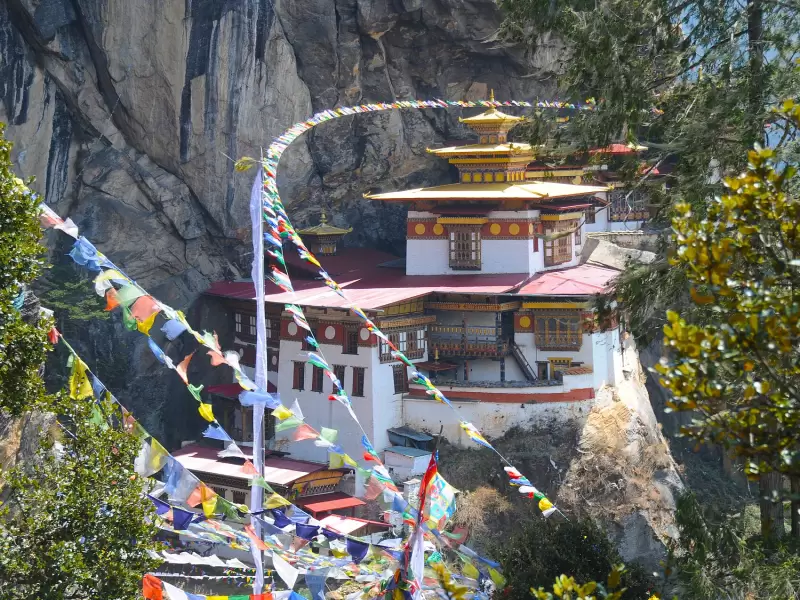
In our view Tiger’s Nest is manageable for active children from about eight years old, and younger ones can do it with plenty of rests. Allow a family five to six hours for the round trip. The teahouse halfway makes a sensible turning point if legs give out, and ponies can carry riders up as far as that. The steps near the monastery are steep, with drops beside them, so small children need a hand held.
Pacing the trip
The mistake is to try to see too much. Bhutan’s roads wind constantly, and two to three hours in a car is enough for most children in one day.
- Choose fewer valleys and more nights in each. Paro, Thimphu and Punakha make a full week for a family.
- Keep to one main activity in the morning and something easy in the afternoon.
- Limit temples to one or two a day. They blur quickly.
- Bring remedies for travel sickness, and ask for the front seat for a child who suffers.
- Build in a free afternoon at the hotel every second or third day.
We would steer most families away from the long drive to Bumthang unless the children are older or good travellers.
Altitude
The valleys on a family itinerary lie between 1,200 m and 2,350 m, and most children adjust without trouble. Take the first day gently and keep them drinking water. Very young children cannot tell you they have a headache, so watch for a change in mood, appetite or sleep. Speak to your doctor before travelling with a baby or toddler. More in our article on altitude.
Food
Bhutanese food can be fiery, but children are well catered for. Hotels will readily produce plain rice, noodles, fried potatoes, eggs, chicken and momos, the steamed dumplings that most children take to at once. Tell us about allergies and strong dislikes when you book. Bring a few familiar snacks for the car. For what is on the table for the adults, see what to eat in Bhutan.
When to come
Spring and autumn have the best weather. If you are tied to school holidays, Easter usually falls in a good season and often near Paro Tshechu. July and August are the monsoon: warm, green and quiet, with rain most days, usually later in the day. Christmas and New Year are cold, dry and clear, and Punakha is pleasantly mild.
What to pack for children
- Layers, including a warm jacket and hat in any season
- Shoes with grip, already worn in
- Sun hat, sunglasses and sun cream
- Travel-sickness remedies and any regular medicine
- A small day pack of their own, with a water bottle
- Something for the car and for evenings: books, cards, a sketch pad
Festivals with children
A tshechu is a wonderful thing for a child to see, in small doses. The masks, the drums and the clowns hold attention for an hour or two. Go early, sit near an edge so that you can leave easily, and bring snacks and sun hats.
A good first itinerary
For most families we would start with six days: two nights in Thimphu, one or two in Punakha, and two in Paro. The Bhutan Signature Journey follows that plan, and we would slow it further for younger children. Tell us their ages on the tailor-made page and we will plan around them.