
What to eat in Bhutan: a guide to Bhutanese food
Chillies as a vegetable, cheese in everything, red rice and butter tea: what Bhutanese food is, what to try and how to ask for it.
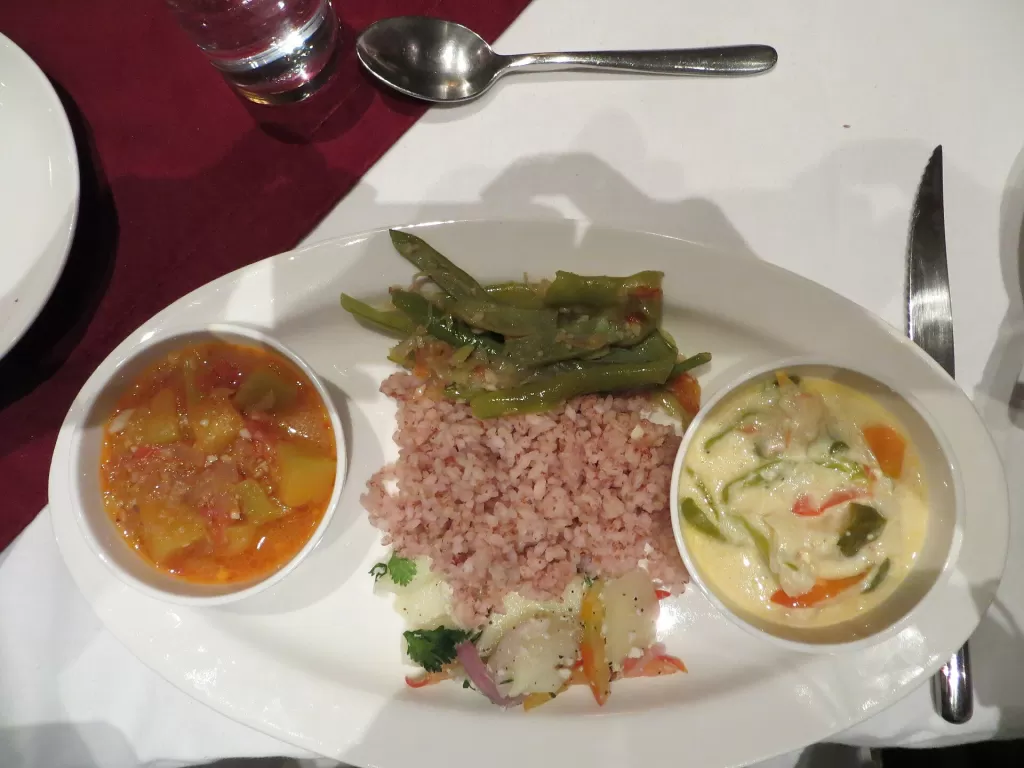
Bhutanese cooking rests on three things: rice, chillies and cheese. That sounds limited and is not. From those three, and from whatever the valley grows, comes a cuisine that is warming, generous and quite unlike the food of India or Tibet on either side.
Chillies are a vegetable
The first thing to know is that a chilli in Bhutan is not a seasoning. It is the main ingredient. Green chillies are cooked whole or split, like beans. Red ones are dried on rooftops every autumn, which is why farmhouse roofs in Paro turn scarlet at harvest time, and are used through the winter.
The national dish is ema datshi: ema means chilli and datshi means cheese. It is a stew of chillies in a sauce of soft local cheese, eaten with rice at almost every meal. It can be very hot. Hotels cook a gentler version for visitors, and nobody will think less of you for asking.
Dishes to look for
- Kewa datshi: potatoes in cheese sauce. Mild, and the best place to start.
- Shamu datshi: mushrooms in cheese sauce. Bhutan has excellent wild mushrooms in late summer.
- Phaksha paa: pork cooked with radish and dried red chillies.
- Shakam paa: dried beef with chillies and radish. Chewy, smoky and good with rice.
- Jasha maru: chicken chopped small and cooked with ginger, tomato and chilli.
- Momos: steamed dumplings filled with cheese and cabbage, or with meat, served with a chilli relish called ezay.
- Hoentay: buckwheat dumplings filled with turnip greens and cheese, a speciality of Haa.
- Puta: buckwheat noodles from Bumthang, where it is too high for rice.
- Goen hogay: a salad of cucumber with chilli, coriander and crumbled cheese.
Red rice
Bhutanese red rice grows in the high valleys of the west, Paro most of all. It is a short grain with a pink-brown colour when cooked, a slightly nutty taste and a soft, sticky texture. You will be served it alongside white rice, and it is worth choosing. In Bumthang and other high places the staple was traditionally buckwheat, and you will still find it as noodles and pancakes.
What to drink
Suja is butter tea: tea leaves churned with butter and salt. It tastes more like a thin soup than tea, and it makes sense on a cold morning at 3,000 m. If it is not for you, ngaja is ordinary sweet milk tea, and it is offered everywhere.
Ara is the local spirit, distilled or fermented at home from rice, maize, wheat or millet. It is served warm, sometimes with butter and egg, and it is stronger than it tastes. You are most likely to be offered it at a farmhouse. Bhutan also brews its own beer, including a wheat beer from Bumthang.
Meat, and eating without it
Bhutan is a Buddhist country, and most Bhutanese will not kill an animal, yet most eat meat when it is available. Much of it is imported, and a good deal is dried. On certain holy days and months, butchers close and meat is not sold.
Vegetarians do very well here. The cheese dishes, the vegetable curries, the dal, the momos and the salads make a full meal without trying. Vegans need to say so clearly, because cheese and butter are in almost everything. Tell us when you book and we will let each hotel know.
How meals work on a trip
Hotel dinners are usually a spread of dishes to share: rice, a cheese dish, one or two vegetables, a meat dish, dal and something mild. Lunch is at a restaurant along the route. If you want what local people eat, at the heat they eat it, ask your guide. Guides are generally delighted to be asked, and they know which kitchens are good.
At a farmhouse you will probably eat sitting on the floor, with dishes passed round. It is polite to refuse a second helping once before accepting. The word is “meshu, meshu”, said with a hand over your mouth, and nobody believes you.
Read more about Bhutanese food
- Ema datshi, the national dish: what is in it, how hot it is and how to order it.
- Bhutanese food culture: how a meal is served, and how to be a good guest.
- Vegetarian and vegan food in Bhutan: the dishes to order and what to watch for.
- What to drink in Bhutan: butter tea, ara and local beer.
Things to try at the market
Thimphu’s weekend market is the best place to see what Bhutan grows. Look for strings of chugo, cubes of dried cheese as hard as stone, which people suck for hours. There are piles of dried chillies, bundles of fern shoots in spring, wild mushrooms in summer, and red rice sold by the scoop.
Food is one of the easiest ways into the country. Several of our tours include a farmhouse visit in Paro, and a meal there can be arranged on any itinerary, starting with the four-day Bhutan Short Trip.