
Ema datshi: the national dish of Bhutan
Chillies and cheese, eaten with rice at almost every meal. What ema datshi is, how it is made, how hot it is, and how to order it as a visitor.
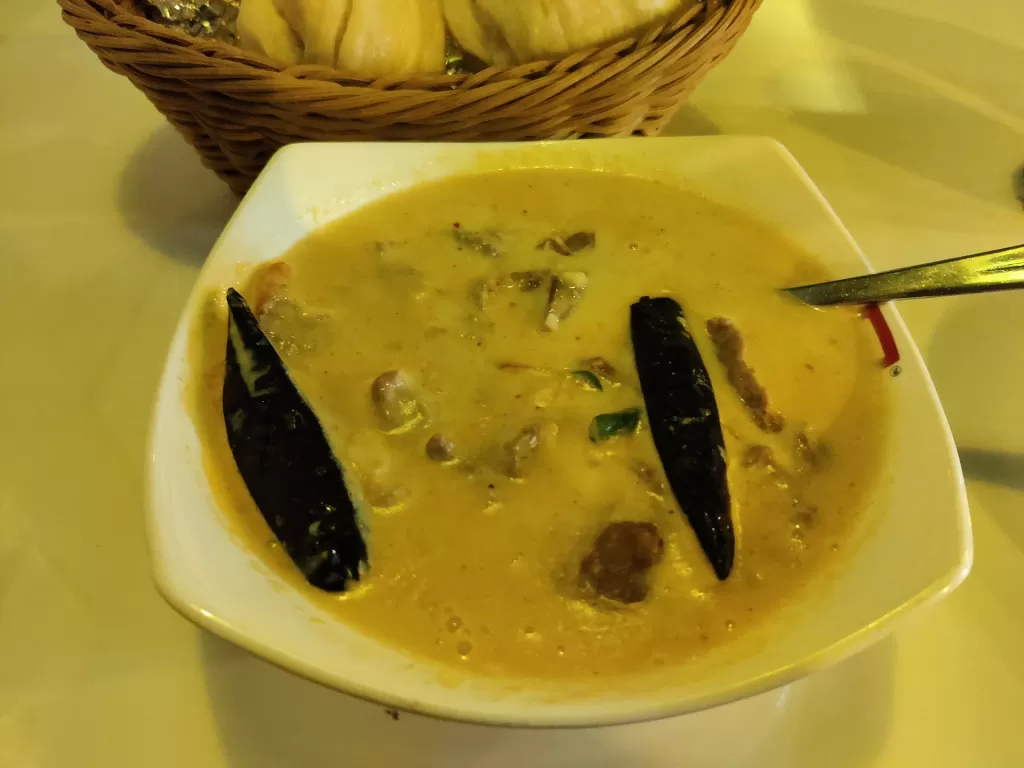
Ask anyone in Bhutan what the national food is and you will get the same two words: ema datshi. Ema is chilli and datshi is cheese, and the dish is exactly that, chillies stewed in a sauce of soft cheese. It is on the table at lunch and at dinner, in farmhouses and in the capital, every day of the year. A meal without it feels unfinished to most Bhutanese.
What is in it
Very little. Chillies, split lengthwise. Onion, sometimes a tomato and a clove of garlic. Water, a little oil or butter, salt. And datshi, the fresh white cheese that Bhutanese households make from the buttermilk left over when butter is churned. The chillies simmer until they are soft, the cheese goes in at the end, and the pot is left alone so that the cheese melts into the liquid without turning stringy.
What comes out is a thin, pale sauce, somewhere between a soup and a stew, with whole pieces of chilli in it. It is always eaten with rice, usually the red rice of the Paro valley. Nobody eats it on its own.
A chilli is a vegetable here
This is the part that surprises visitors. In most cooking a chilli is a seasoning, used by the pinch. In Bhutan it is the vegetable itself, used by the handful. A pot of ema datshi for a family holds as many chillies as another country would put beans in a pot of beans.
Chillies are not native to the Himalaya. They came from the Americas and reached these valleys only a few centuries ago, and Bhutan took to them more completely than almost anywhere on earth. Today every farm grows them. In autumn they are spread on rooftops to dry, and the roofs of Paro and Punakha turn red for weeks.
The chillies
- Fresh green chillies: large, fleshy and used through the summer. The usual choice for ema datshi.
- Dried red chillies: the autumn crop, dried on the roof and used all winter. Deeper in flavour, and often hotter.
- Dried white chillies: green chillies scalded and dried in the sun until they turn pale. They keep for a year and give the dish a slightly sour edge.
How hot is it?
It varies a great deal, and that is the honest answer. Made with large fresh green chillies and plenty of cheese, it is hot in the way a strong curry is hot. Made with small dried red ones for a family that likes it that way, it can stop a visitor after one spoonful.
- Hotels cook a gentler version for guests. It is still the real dish.
- Take a small spoonful over a lot of rice. That is how it is meant to be eaten.
- If your mouth is on fire, eat plain rice. Water spreads the heat; rice takes it away.
- The cheese sauce is milder than the chillies. You can eat the sauce and leave the chillies on the side of the plate, and many visitors do.
- Ask your guide to tell the kitchen how hot you would like it. Nobody is offended.
The rest of the family
Once you know the word datshi you can read half a Bhutanese menu. The same cheese sauce is cooked with other things, and with far fewer chillies:
- Kewa datshi: potatoes. Mild and comforting, and where most visitors begin.
- Shamu datshi: mushrooms, at their best in late summer when wild ones are in the markets.
- Shakam datshi: dried beef, chewy and smoky.
- Nakey datshi: the curled tips of young ferns, a dish of spring.
Where to try it
You will not need to look for it: it will arrive at your first lunch. The version to remember, though, is the one cooked on a wood stove in a farmhouse, with cheese made in that kitchen and chillies from that roof. A farmhouse meal in Paro can be added to any trip, and the Haa valley and Bumthang are good places for one too.
Ema datshi is the beginning of Bhutanese cooking, not the whole of it. Our guide to Bhutanese food covers the other dishes, and if you do not eat meat, see vegetarian food in Bhutan: ema datshi is on your list.