
Bhutan’s Sustainable Development Fee: what it pays for
Visitors to Bhutan pay US$100 a night to the government. Here is why the fee exists, where the money goes, and how to think about it when you plan.
Visitors to Bhutan pay a Sustainable Development Fee of US$100 for every night they stay. It is the first thing most people notice when they start planning, and the question we are asked most often is a fair one: what is it for?
What the fee is
The fee is a levy paid to the government of Bhutan. It is not a charge by tour operators or hotels, and none of it stays with us. Adults pay US$100 a night, children aged 6 to 11 pay US$50, and children under 6 pay nothing. The current rate runs until 31 August 2027. The full rules are on our SDF page.
High value, low volume
Bhutan opened to visitors in 1974 and decided early that it did not want mass tourism. The policy has had different names over the years, and the phrase used now is “high value, low volume”. The idea is unchanged: fewer visitors, each contributing more, so that tourism pays for the country without wearing it out. It belongs to the same way of thinking as Gross National Happiness.
Until 2022 this worked through a minimum daily package price. Since Bhutan reopened in September 2022 the fee has stood on its own, and travellers are free to choose their own hotels and operator.
Where the money goes
The Department of Tourism describes the fee as funding national programmes. Health care and schooling are free for Bhutanese citizens, and the fee helps pay for both. It also supports conservation, which matters in a country whose constitution requires that at least 60 per cent of its land stays under forest for all time.
Some of it goes into what visitors use directly: trails, roads, the upkeep of monuments and the training of guides.
Is it worth it?
That depends on what you want from a trip. If the aim is to see as many places as possible for as little as possible, Bhutan is the wrong country. A week here costs more than a week in Nepal or northern India.
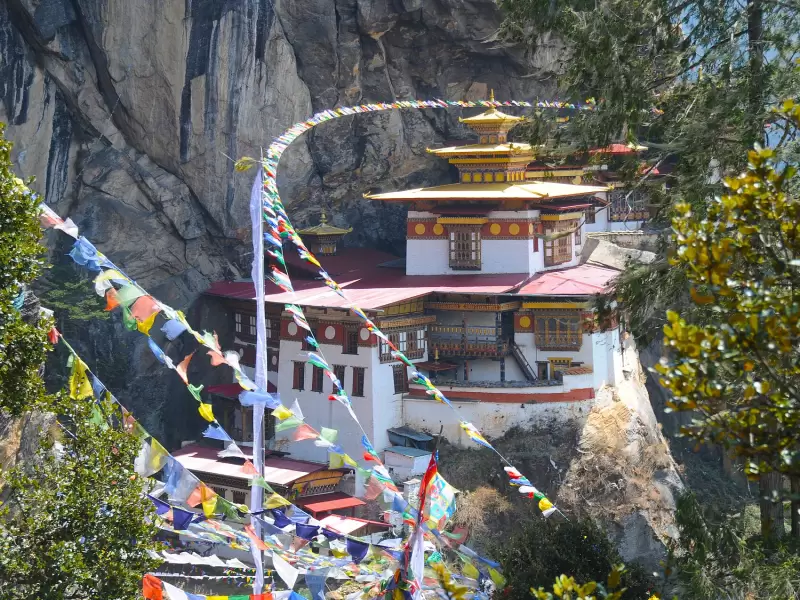
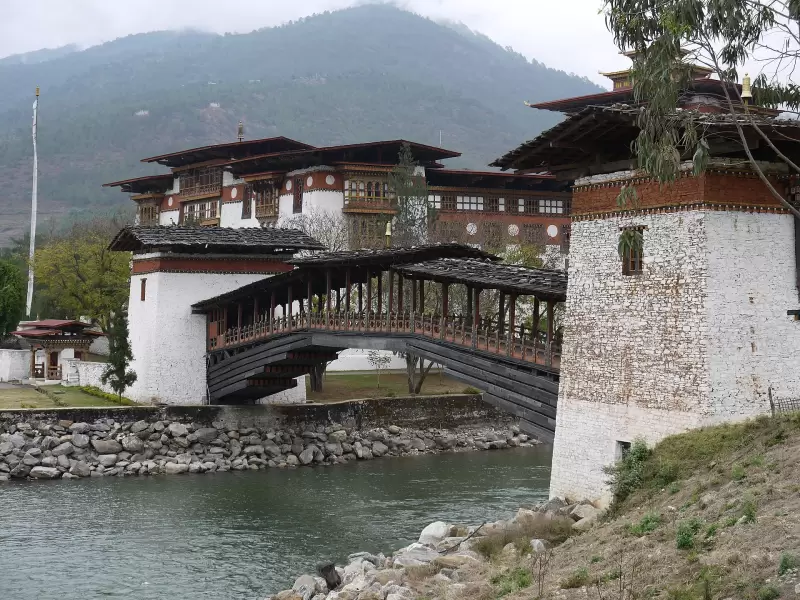
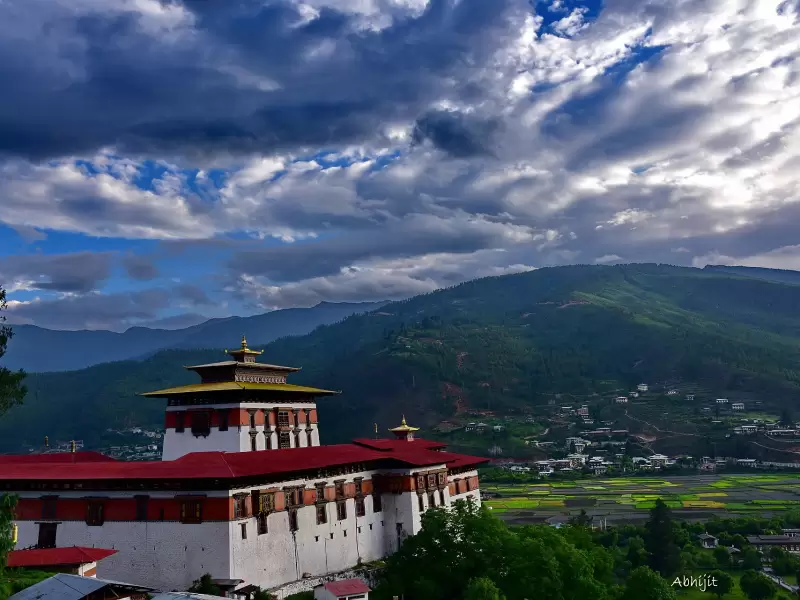
What the fee buys is what the country has kept. The dzongs are working monasteries and offices, not museums. Forest still covers the hills between the valleys. The path to Tiger’s Nest is busy on a fine morning, but it is a path and not a queue. We think that is worth paying for.
How to plan around it
- The fee is charged per night, so a shorter, fuller itinerary costs less than a slow one.
- Children under 12 pay half or nothing, which helps families.
- The fee is the same all year. Travelling in winter or summer saves on hotels and flights, not on the fee.
- Every price on this site already includes it.
If you would like to see what a trip costs in total, our four-day Bhutan Short Trip shows the full price per person with the fee and visa included.